The honest first question is not "which food processor" but "do I even need one". If you already own a good mixer grinder, a lot of Indian tasks - chutney, masala paste, small chopping - are already covered. A food processor earns its place when you regularly do bulk prep: kneading atta for a large family, slicing and shredding vegetables for sabzi or salads, grating paneer and cheese, whisking, and chopping onions in quantity. A hand or electric chopper, by contrast, is a small, cheap single-trick tool for quickly dicing onions, tomatoes, garlic, and nuts.
In Indian kitchens the two most valued features are usually the atta-kneading attachment and the slicing/shredding discs, because those are the jobs a mixer grinder does badly or not at all. A food processor is a bulkier, pricier machine with many attachments and a learning curve; a chopper is grab-and-use but limited. Choosing well means being realistic about how often you will actually pull out a big appliance versus reaching for a knife or the mixer.
This guide helps you decide between a manual chopper, an electric chopper, and a full food processor; explains the wattage, bowl capacity, blades and discs that matter; and flags the mistakes that leave these machines gathering dust in a cabinet. Brands like Philips, Bajaj, Inalsa, Wonderchef, Prestige and Morphy Richards are common; match features to your cooking, not to the longest attachment list.
Our top food processors & choppers picks
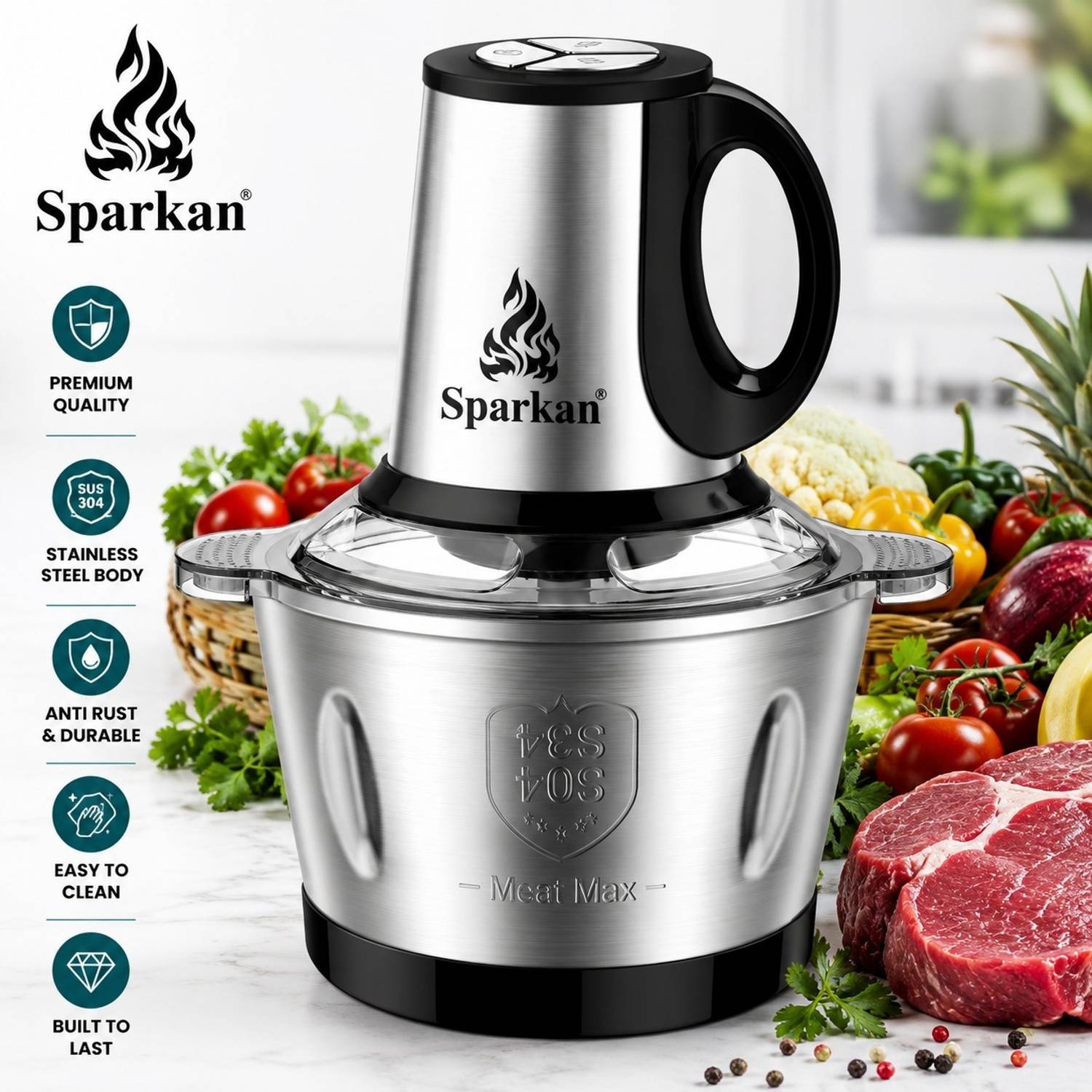
Sparkan Meat Grinder 3 Liter with Handle - Stainless Steel Heavy Duty Food Chopper Electric Vegetable & Fruit Chopper

SUJATA Chopcraft 900ml, 260W | Dual Speed | 3200 RPM High Speed Motor Electric Vegetable Chopper
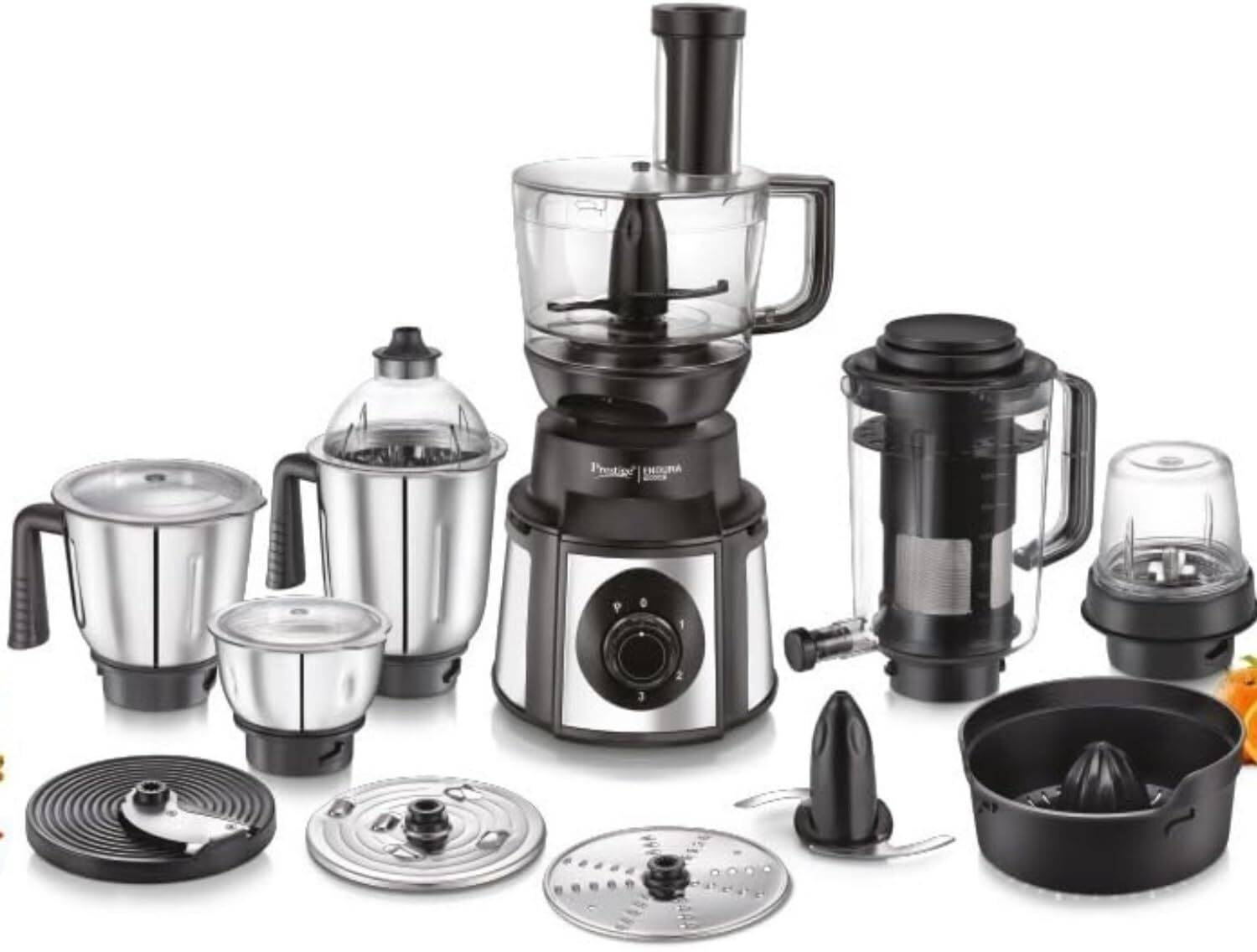
Prestige Endura Pro With Ball Bearing Technology | Multi Utility Jar | 1000 W Food Processor
Want the full ranked list with filters and prices?See all food processors & choppers ranked ›
What actually matters when buying food processors & choppers
What to expect at each budget
Who it’s for — the right food processors & choppers by person
Common mistakes to avoid
- Buying a full food processor when a mixer grinder plus a knife already covers your cooking - it ends up unused in a cupboard.
- Choosing an underpowered sub-500W unit and then straining it on stiff atta, which overheats the motor and gives poor kneading.
- Getting a tiny bowl for a large family, so you knead and slice in multiple frustrating batches every time.
- Assuming a chopper can knead dough or a processor can grind wet masala as finely as a mixer - each tool has a lane.
- Ignoring the number and quality of discs; a processor without good slicing/shredding discs loses its biggest advantage over a mixer.
- Not accounting for cleaning and storage of many parts, which is the real reason these machines get abandoned.
Tips for buying in India
- Cut vegetables into feed-tube-sized pieces before slicing to get even results and avoid jamming the disc.
- For atta, add water gradually through the feed tube while the dough blade runs, so the dough comes together evenly without over-kneading.
- Use the pulse function for chopping onions to avoid turning them into a watery paste.
- Fit the correct blade or disc firmly and lock the lid before switching on; most units won't start otherwise, and that interlock is protecting your fingers.
- Process in reasonable batches rather than overfilling; an overpacked bowl slices unevenly and strains the motor.
- Rinse blades and discs right after use before food dries on them; handle the sharp edges by the plastic hub, not the cutting edge.
- Chill butter or paneer slightly before grating for cleaner shreds that don't gum up the disc.
- Store the sharp discs and blades in their holder or a safe box, not loose in a drawer where they dull and cause cuts.
Frequently asked questions
Do I need a food processor if I already have a mixer grinder?
Only if you regularly knead atta in bulk or slice, shred and grate lots of vegetables, paneer or cheese - jobs a mixer does poorly. For chutney, masala and small chopping, your mixer is enough and a processor may just gather dust.
Can a food processor knead atta well?
Yes, a 600W+ processor with a dedicated dough blade kneads soft, even atta hands-free, which many buyers rate as the main reason to own one. Under-powered units struggle with stiff dough, so don't skimp on wattage for this task.
What's the difference between a chopper and a food processor?
A chopper is a small single-purpose tool for dicing onions, garlic, tomatoes and nuts. A food processor is a larger multi-function machine that also kneads dough, slices, shreds, grates and purees using interchangeable discs and blades.
Manual or electric chopper - which is better?
A manual pull-cord chopper is cheap, portable, needs no power and is perfect for small quick jobs. An electric chopper is faster and less effort for slightly larger quantities but costs more and needs a socket. Choose based on how much you chop.
Can a food processor replace my mixer grinder?
Not fully. A mixer grinds wet masala, chutney and batter finer and is better for smoothies. A processor excels at kneading, slicing and shredding. Many kitchens keep both because each does different jobs well.
How much wattage do I need?
For light chopping, 250-400W is fine. For a family that kneads atta and slices vegetables regularly, 600-800W is the practical range. Go above 800W only for frequent heavy or bulk prep.
Are food processors hard to clean?
They have more parts - bowl, lid, blades and discs - so cleaning takes longer than a chopper. Rinsing immediately after use and choosing a model with easy-clean or dishwasher-safe parts keeps it manageable, otherwise the effort discourages daily use.
Is a food processor safe with children around?
Modern units have safety interlocks that prevent operation unless the bowl and lid are locked, which is important given the sharp discs. Always store blades safely and keep kids away while attaching or removing the sharp parts.