A fry pan is the workhorse you reach for to fry eggs, saute onions, temper a tadka, shallow-fry cutlets and finish a quick sabzi. Yet most Indian kitchens end up with a drawer of half-dead nonstick pans because they were bought on price and heat abuse killed the coating. The real decision is not which brand to buy but which material fits how you actually cook: nonstick for ease, cast iron for high-heat searing and durability, or triply stainless steel for a do-everything pan that lasts a lifetime.
Each material makes a genuine trade-off. Nonstick is effortless and uses less oil, but the coating is a wear item that hates high heat and metal spatulas. Cast iron sears beautifully, adds a little iron to food and lasts for generations, but it is heavy and needs seasoning. Triply (stainless steel bonded with an aluminium core) is oven-safe, dishwasher-safe, indestructible and healthy, but it costs more and needs technique to keep food from sticking. Your heat source matters too, because a growing number of Indian homes now run induction alongside or instead of gas.
This guide breaks down the materials, coatings and construction that actually matter, gives realistic Indian price bands for single pans and sets, and flags the mistakes that send pans to the scrap dealer early. The goal is to help you spend on the right pan for your cooking rather than replacing cheap ones every year.
Our top fry pans & cookware sets picks
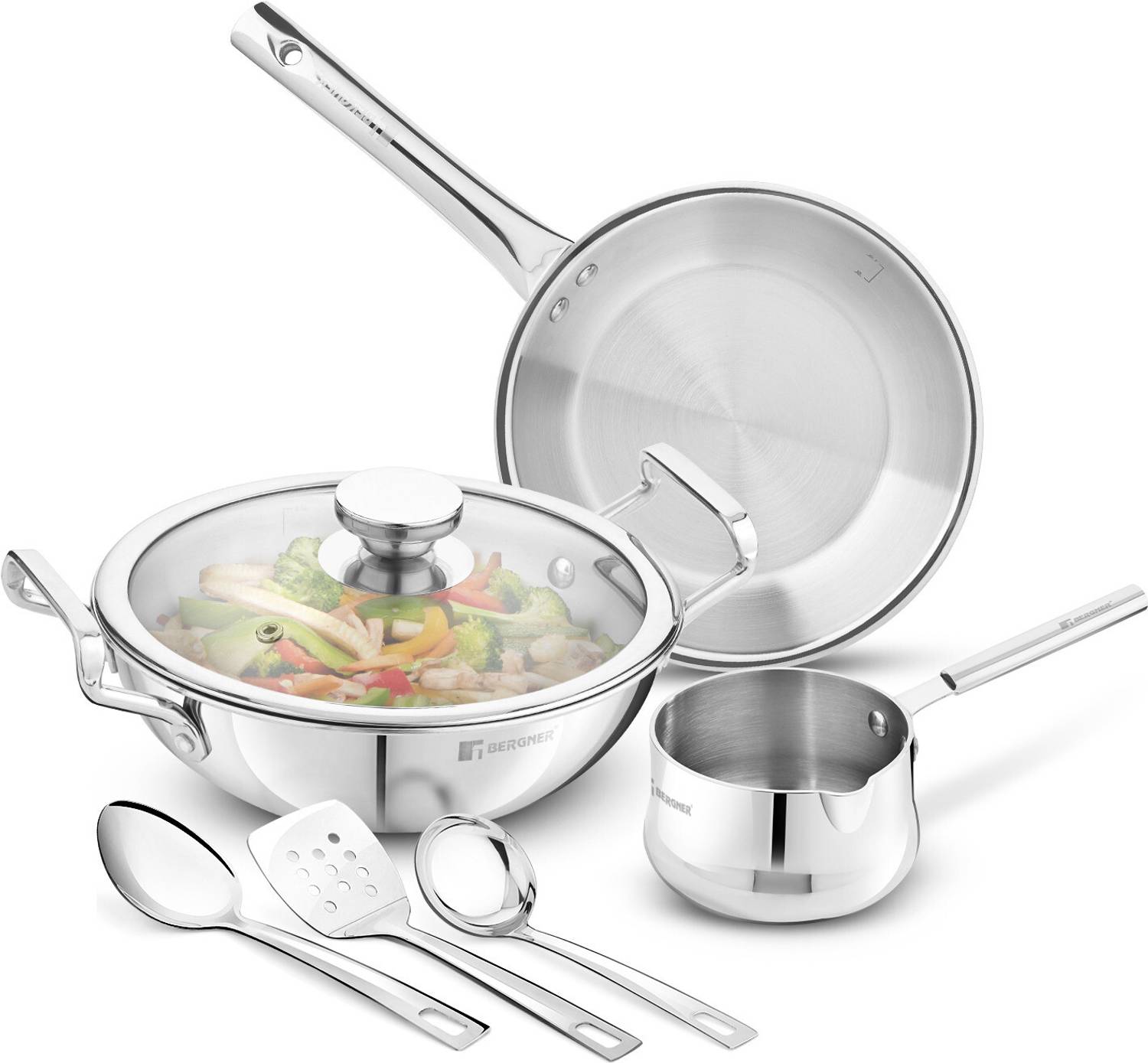
BERGNER Tripro Triply Stainless Steel 7 Pcs Cookware Set
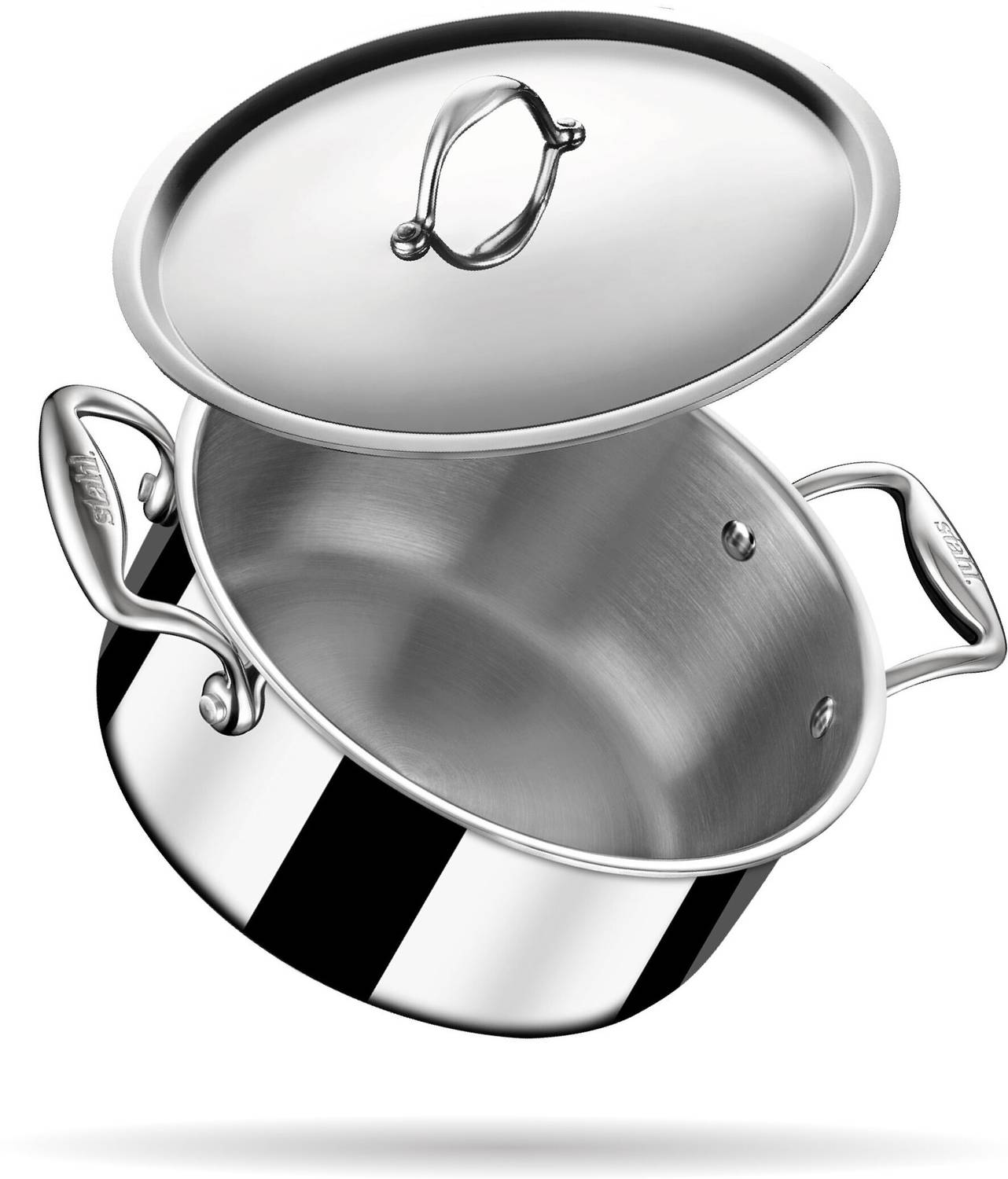
Stahl Artisan Triply Stainless Steel 18cm Cook and Serve Casserole

NAVRANG Fry Pan 22 cm diameter 1.2 L capacity
Want the full ranked list with filters and prices?See all fry pans & cookware sets ranked ›
What actually matters when buying fry pans & cookware sets
What to expect at each budget
Who it’s for — the right fry pans & cookware sets by person
Common mistakes to avoid
- Buying the cheapest nonstick pan and then using high heat and metal spatulas on it, which destroys the coating within months.
- Choosing a cookware set purely on the number of pieces; many sets pad the count with pans you will never use.
- Assuming every pan works on induction; pure aluminium nonstick often will not heat without a bonded magnetic base.
- Overheating an empty nonstick pan, which can damage the coating and is best avoided for both longevity and safety.
- Ignoring handle quality and buying pans with flimsy screwed-on handles that loosen and cannot go in the oven.
- Expecting triply or stainless steel to be nonstick and giving up when food sticks, rather than learning to preheat and use enough oil.
Tips for buying in India
- Match the pan to the job: keep a nonstick for eggs and chilas, and a cast-iron or triply for searing and high-heat cooking.
- For nonstick, cook on low-to-medium heat only, use wooden or silicone spatulas, and never scrape the surface with metal.
- Season cast iron before first use and re-oil it after washing; store it dry to prevent rust in humid weather.
- To stop food sticking on triply, preheat the empty pan, add oil, wait until it shimmers, then add the food; it releases once it is properly seared.
- Let any hot pan cool before washing; plunging a hot pan into cold water warps the base and can crack cast iron.
- Check the base is flat and thick before buying; a heavier base almost always cooks more evenly and lasts longer.
- If you use induction, confirm the pan has a magnetic base by testing with a fridge magnet before you buy.
- Buy a couple of quality single pans in the sizes you actually use rather than a large set full of pieces you will ignore.
Frequently asked questions
Is nonstick cookware safe to use in India?
Modern PFOA-free nonstick is considered safe for normal home cooking on low-to-medium heat. The main risks come from overheating empty pans and using scratched, peeling coatings, so keep the heat moderate and replace pans once the coating is damaged.
Nonstick, cast iron or triply, which should I buy?
Choose nonstick if you want the easiest cooking and least oil, cast iron if you want high-heat searing and a lifetime pan you will maintain, and triply if you want a healthy, durable, oven-safe do-everything pan and are willing to learn the technique. Many kitchens keep one nonstick plus one cast-iron or triply.
How long does a nonstick coating last?
With gentle use, a good PFOA-free coating lasts roughly 2-4 years. High heat, metal utensils and dishwasher cycles shorten this considerably, so treat nonstick as a consumable rather than a permanent pan.
Does food stick on triply stainless steel?
It can, until you learn the technique. Preheat the empty pan, add oil and let it shimmer before adding food; properly seared food releases on its own. Once you get the hang of it, triply is genuinely versatile and lasts for decades.
Are cookware sets worth buying?
Only if the pieces match your cooking. A good 3-4 piece set can be better value than buying separately, but avoid large sets padded with pans you will never use. Check that the fry pan, kadai and saucepan sizes are ones you actually need.
Can I use my fry pan in the oven?
Cast iron and triply pans are usually oven-safe, which is handy for finishing dishes. Most nonstick pans and those with plastic handles are not, so check the manufacturer's temperature rating before putting any pan in the oven.
How do I make my pans induction-compatible?
The pan itself must have a flat, magnetic (ferromagnetic) base; you cannot make an aluminium pan induction-ready. Cast iron and triply work on induction, and many nonstick pans now come with a bonded steel disc, so check for an induction mark.
Why is my hard-anodised pan discolouring?
Some darkening and staining is normal with use and does not affect performance. Avoid harsh abrasives and the dishwasher, which can dull the finish faster; hand-washing keeps hard-anodised pans looking and working well for longer.