Most Indian kitchens run on exactly two things: a small utility knife that has gone dull, and a well-loved chopping board. That works until you start dicing onions in bulk, portioning chicken, or slicing tomatoes that end up crushed instead of cut. A good knife is not about looking like a chef on television; it is about safety, speed and less strain on your wrist. A sharp knife is actually safer than a blunt one because it goes where you point it instead of skidding across a smooth onion skin.
The Indian buying context is a little different from Western guides you may have read. Our humidity and monsoon months are hard on steel, so rust resistance matters more here than blade romance about high-carbon Japanese steel. Our cooking involves a lot of hard vegetables (raw banana, pumpkin, sweet potato), ginger-garlic, coriander bunches and bone-in meat, so a general-purpose blade that handles rough use beats a delicate specialist knife for most homes.
This guide covers what actually matters when buying knives and chopping tools in India: blade steel and rust, the difference between a chef's knife, santoku and utility knife, when serrated helps, keeping an edge with honing versus sharpening, choosing between wooden and plastic boards, and small but useful tools like kitchen scissors. The aim is to buy one or two good pieces you will use daily, not a 12-piece block set where 9 knives gather dust.
Our top knives & chopping tools picks

VENUSATURN 3 Pc Stainless Steel Knife Set Professional Kitchen Knife Set

ZROY ENTERPRISE 3 Pc Stainless Steel Knife Set 3-Piece Blue Non-Stick Kitchen Knife Set
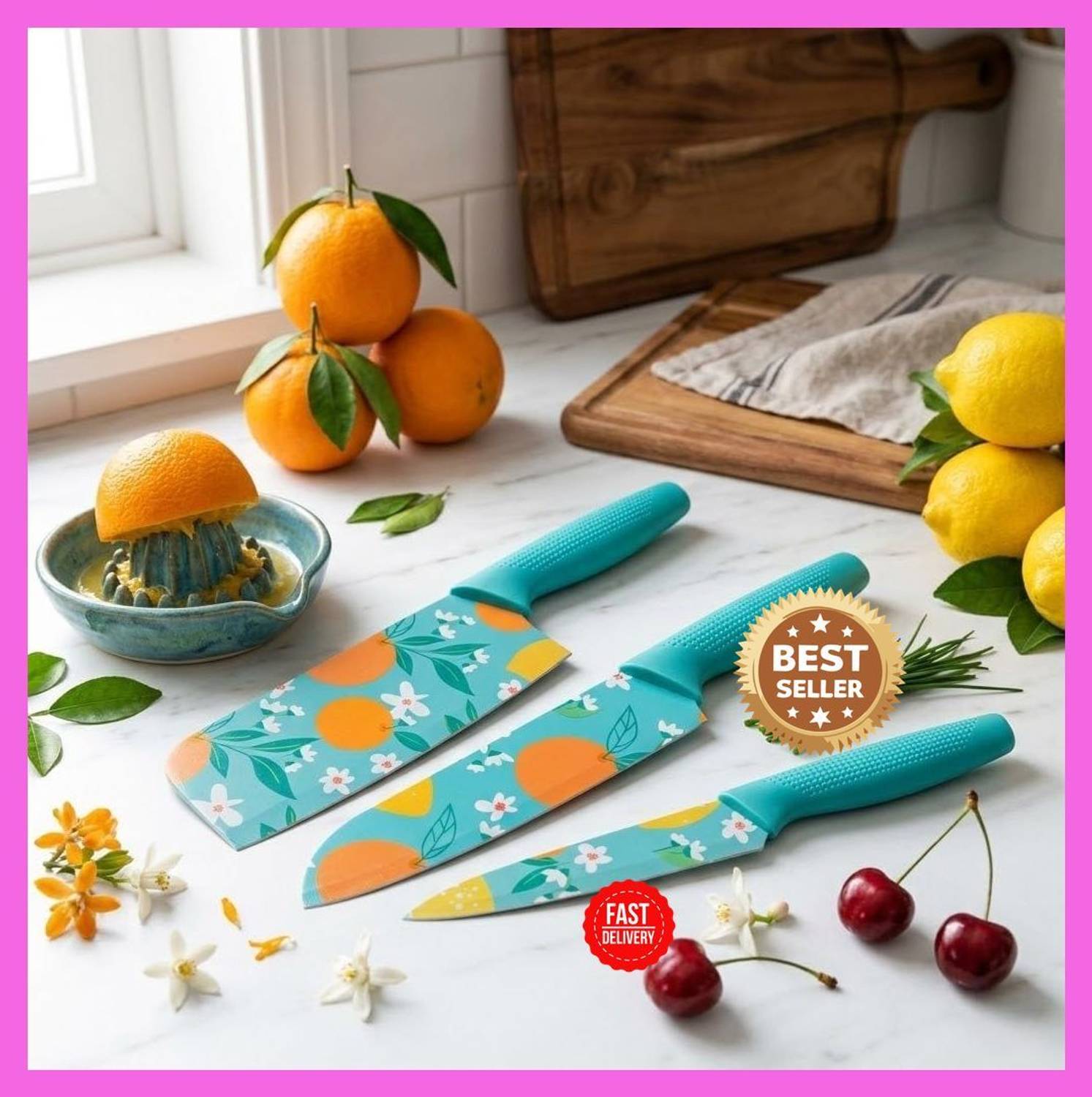
Depoff 3 Pc Stainless Steel Knife Set Printed SS Ultra Sharp Pairing Knife Vegetable for Kitchen
Want the full ranked list with filters and prices?See all knives & chopping tools ranked ›
What actually matters when buying knives & chopping tools
What to expect at each budget
Who it’s for — the right knives & chopping tools by person
Common mistakes to avoid
- Buying a large block set of 8-12 knives when you will realistically only use two or three; the rest occupy counter space and dull anyway.
- Leaving knives wet in the sink or dish rack, which rusts even stainless blades at the tang and pits the edge over time.
- Putting good knives in the dishwasher, where they knock against other items, dull the edge and loosen the handle.
- Assuming a knife stays sharp forever and never honing or sharpening it, then blaming the knife when it crushes tomatoes.
- Choosing a knife purely on looks or a shiny finish without checking handle grip and tang construction.
- Using a glass or stone chopping board or a ceramic plate as a cutting surface, which destroys the edge almost instantly.
Tips for buying in India
- Hone your knife with a honing rod every few uses to realign the edge; sharpen it fully only every few months when honing no longer helps.
- Dry every knife immediately after washing and store it in a knife block, magnetic strip or blade guard rather than loose in a drawer.
- Keep one plain-edge chef's or santoku knife for daily chopping and one small serrated knife for bread and tomatoes; that covers most homes.
- Use a food-grade plastic (HDPE) board for raw meat and chicken and a separate wooden board for vegetables to avoid cross-contamination.
- Oil wooden boards with food-safe mineral oil once a month and never soak them, or they crack and warp in dry weather and swell in monsoon.
- Learn the claw grip, curling your fingertips under while guiding food with your knuckles, to cut faster and protect your fingers.
- Replace a plastic board once it develops deep knife grooves, as those trap bacteria that washing cannot fully reach.
- A dedicated pair of kitchen scissors handles herbs, packaging and chicken faster than a knife; pick one with a screw joint that comes apart for cleaning.
Frequently asked questions
Chef's knife or santoku for Indian cooking?
Both work well. A chef's knife has a curved edge that rocks for mincing ginger, garlic and coriander, while a santoku uses a straight push-cut that gives clean slices of onion and vegetables. If you can buy only one, a 20 cm chef's knife is the more versatile all-rounder for Indian prep.
Is high-carbon steel worth it in India's humid climate?
Only if you are willing to maintain it. High-carbon blades take a razor edge and hold it longer, but they rust and stain quickly in humidity unless you dry them immediately and oil them occasionally. For most homes, good stainless steel is the safer, lower-maintenance choice.
How often should I sharpen my kitchen knife?
Hone it (realign the edge with a honing rod) every few uses, which takes seconds. A full sharpening, which removes metal to create a new edge, is usually needed only once every two to four months for a home cook, or when the knife starts crushing rather than slicing.
Wooden or plastic chopping board, which is more hygienic?
Both are fine if maintained. Food-grade plastic (HDPE) is easy to wash, dishwasher-safe and best for raw meat, but deep grooves eventually harbour bacteria. Wood is naturally somewhat antimicrobial and gentler on knife edges, but must be dried and oiled and never soaked. Many homes keep one of each.
Do I really need a serrated knife?
Only for a couple of jobs. Serrated edges are excellent for bread, buns and soft-skinned tomatoes where a plain edge slips. For everything else a sharp plain-edge knife is better because you can re-sharpen it at home, which is very hard to do with serrations.
Are expensive imported knives actually better?
The steel and forging on premium German and Japanese knives are genuinely better and last longer, but they only pay off if you cook a lot and maintain them. For most Indian home cooks, a well-cared-for ₹1,000-₹2,000 stainless knife performs perfectly and costs a fraction to replace.
How do I stop my knife from rusting?
Wash it by hand, dry it fully right after use, and never leave it soaking in the sink or sitting wet in a rack. Store it dry in a block, on a magnetic strip or in a blade guard. Even stainless steel can develop rust spots if repeatedly left wet, especially near the handle.
Can I sharpen knives at home without special skills?
Yes. A pull-through knife sharpener is the easiest option and good enough for daily home use. A whetstone gives a superior edge but has a learning curve. Honing rods do not sharpen; they realign the edge between sharpenings. Start with a pull-through sharpener if you are unsure.