Few kitchen purchases confuse Indian buyers more than the oven aisle, because three very different appliances get lumped together: the microwave oven, the OTG (oven-toaster-griller), and the convection microwave. They look similar, overlap in some jobs, and cost roughly the same, but they cook in fundamentally different ways. Buy the wrong one and you end up with a machine that reheats dal beautifully but cannot bake a birthday cake, or vice versa.
The short version: a solo microwave heats and reheats using microwaves and cannot brown or bake. An OTG uses heating coils (like a traditional oven) and is the baker's choice for cakes, bread, cookies and grilling, but it cannot reheat quickly. A convection microwave combines microwave speed with a fan and heating element, so it reheats fast and can also bake and grill, making it the do-it-all option for those short on space. Which is right depends entirely on what you cook.
This guide is written for Indian kitchens and Indian cooking: reheating rice and sabzi, making dahi, baking the occasional cake, grilling tikka and paneer, and roasting. We will explain the three types clearly, the specs that matter, honest price bands on 230V supply, and which appliance fits a reheating-focused home versus a serious baker.
Our top ovens & microwaves picks
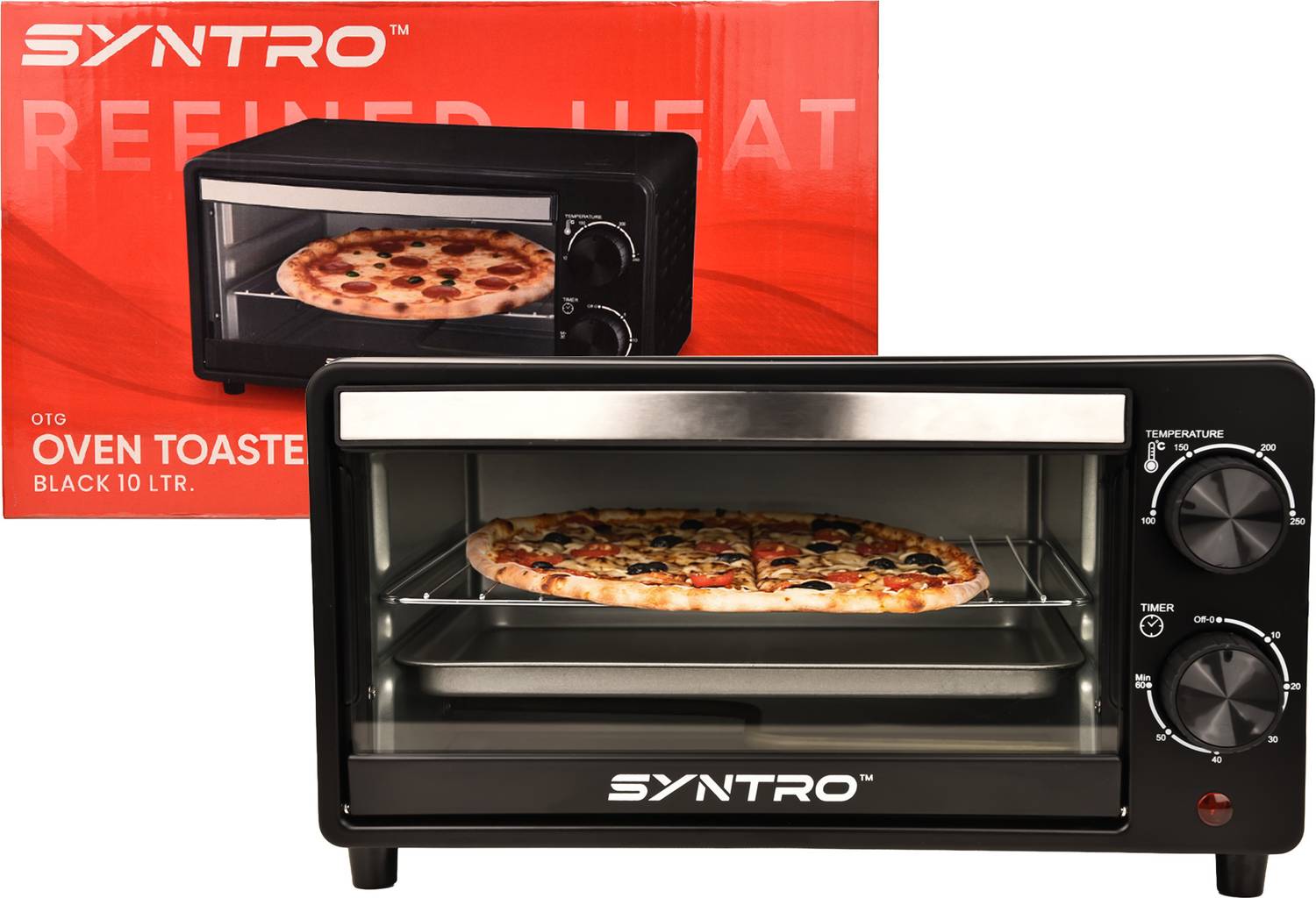
Syntro 10-Litre Oven Toaster Grill OTG Healthify, Black

Morphy Richards 29-Litre Oven Toaster Grill OTG 29RCAD, BLUE

Morphy Richards 20 L Solo Microwave Oven
Want the full ranked list with filters and prices?See all ovens & microwaves ranked ›
What actually matters when buying ovens & microwaves
What to expect at each budget
Who it’s for — the right ovens & microwaves by person
Common mistakes to avoid
- Buying a solo microwave expecting to bake cakes. Solo models only heat with microwaves; they cannot brown, crisp or bake. If baking matters, you need an OTG or a convection microwave.
- Buying an OTG to reheat daily meals. OTGs heat with coils and take several minutes to warm up, so reheating a bowl of dal is slow and clumsy compared to a microwave.
- Undersizing for baking. A 9-19L OTG cannot fit a standard cake tin or a whole chicken; bakers routinely regret going small to save a little money and space.
- Ignoring preheating for the OTG. Skipping the 10-minute preheat gives unevenly baked, dense cakes and bread; the oven must be at temperature before food goes in.
- Using metal or the wrong utensils in a microwave. Metal, some plastics and non-microwave-safe crockery can spark, melt or leach; only microwave-safe glass, ceramic and marked plastics belong inside.
- Overlooking service and magnetron warranty. Microwave magnetrons are expensive to replace, so a cheap unit with a short warranty and no local service can cost more in the long run.
Tips for buying in India
- Decide by your main job first: mostly reheating means a microwave, mostly baking means an OTG, and wanting both in one box means a convection microwave.
- For an OTG, always preheat for about 10 minutes and use both top and bottom rods for cakes and bread for even rising and browning.
- In a microwave, cover food loosely to trap steam and reheat evenly, and stir or rotate midway so there are no cold spots.
- You can set curd (dahi) using the residual warmth of an OTG or the microwave's low/warm setting overnight; it is a handy Indian-kitchen trick.
- Use an oven thermometer in an OTG if your baking comes out inconsistent; built-in dials can be off by 10-20°C, which ruins delicate bakes.
- For grilling tikka or paneer, use the grill or convection mode with the high rack, and brush with a little oil so it chars rather than dries out.
- Keep the microwave turntable and OTG crumb tray clean; food splatter absorbs microwaves, slows heating and can cause burning smells.
- Match utensils to the appliance: metal trays for OTG, microwave-safe glass or ceramic for microwaves, and never metal in microwave mode of a convection unit.
Frequently asked questions
What is the difference between a microwave, OTG and convection oven?
A solo microwave heats food quickly using microwaves but cannot brown or bake. An OTG uses electric heating coils like a conventional oven and is best for baking and grilling, but reheats slowly. A convection microwave combines both, so it reheats fast and can also bake, grill and roast. Your main cooking need decides which to buy.
Can I bake a cake in a microwave?
Only in a convection microwave, not a solo or grill-only model. A solo microwave cannot brown or set a cake properly. If you want to bake regularly, an OTG or a convection microwave is the right choice; a solo microwave is for reheating and basic cooking only.
Which is better for an Indian home, OTG or convection microwave?
If you mostly reheat meals and only bake occasionally, a convection microwave gives you both jobs in one appliance and saves counter space. If you bake often — cakes, cookies, bread — a dedicated OTG usually bakes more evenly and offers larger capacity for the price. Serious bakers lean OTG; convenience-seekers lean convection microwave.
What capacity should I choose?
For microwaves, 20-23L suits 1-2 people, 25-30L suits a family. For OTGs, 9-19L handles toasting and small bakes, 21-30L suits regular home baking, and 40-60L suits serious bakers or large families. Pick based on your largest dish, such as a full cake tin or a whole chicken.
Is microwave cooking safe and healthy?
Yes. Microwaves heat by exciting water molecules in food and do not make food radioactive or unsafe. Because cooking is fast and uses little or no water, it can actually preserve more nutrients than long boiling. Just use microwave-safe containers and avoid heating food in most plastics.
Why does my OTG bake unevenly?
Common causes are not preheating, using only one heating rod when both are needed, an inaccurate temperature dial, or placing the tray at the wrong rack level. Preheat fully, use top and bottom rods for cakes, rotate the tray if your oven has hot spots, and check the real temperature with a separate oven thermometer.
Can I put metal or foil inside?
In an OTG, yes — metal trays and foil are fine because it heats with coils. In a microwave or in the microwave mode of a convection oven, no — metal sparks and can damage the magnetron. Only use metal in the dedicated convection or OTG mode, never in microwave mode.
How long do these appliances last, and what fails?
A well-maintained microwave or OTG typically lasts 7-10 years. In microwaves, the magnetron is the costly part that can fail; in OTGs, heating rods and thermostats are the usual culprits. Buy from a brand with local service and check the magnetron warranty separately, as it is often longer than the overall unit warranty.