The pressure cooker is the beating heart of the Indian kitchen. Dal, rice, chana, rajma, biryani, boiled potatoes, even cakes - it cooks faster, saves gas, and preserves nutrients better than open boiling. But "pressure cooker" hides several real choices that change daily life: inner-lid versus outer-lid, aluminium versus stainless steel versus hard-anodised body, gas-only versus induction-compatible base, and the litre size that fits your family. Getting these right is the difference between a cooker you love for a decade and one that leaks steam and rusts.
The two big Indian schools are outer-lid cookers (the classic Prestige/Hawkins-style lid that sits on top) and inner-lid cookers (Hawkins-style lid that goes inside and locks, favoured for a tighter seal and safer venting). Body material decides weight, heat behaviour, staining and price - aluminium is light and cheap, stainless steel is durable and healthier-looking but heats less evenly, and hard-anodised resists corrosion and staining. Safety hardware - the gasket, the safety valve, and the whistle/vent weight - is what keeps the whole thing safe under pressure, and these are consumables you will replace over the cooker's life.
This guide walks through inner-lid vs outer-lid, materials, safety valves and gaskets, induction compatibility, and how to size in litres per family. It also covers ISI marking (mandatory for pressure cookers in India), brand service and spare-part availability, and the everyday mistakes that cause blown gaskets and stuck lids. Buy the right one once and it becomes the most-used vessel in your kitchen.
Our top pressure cookers picks
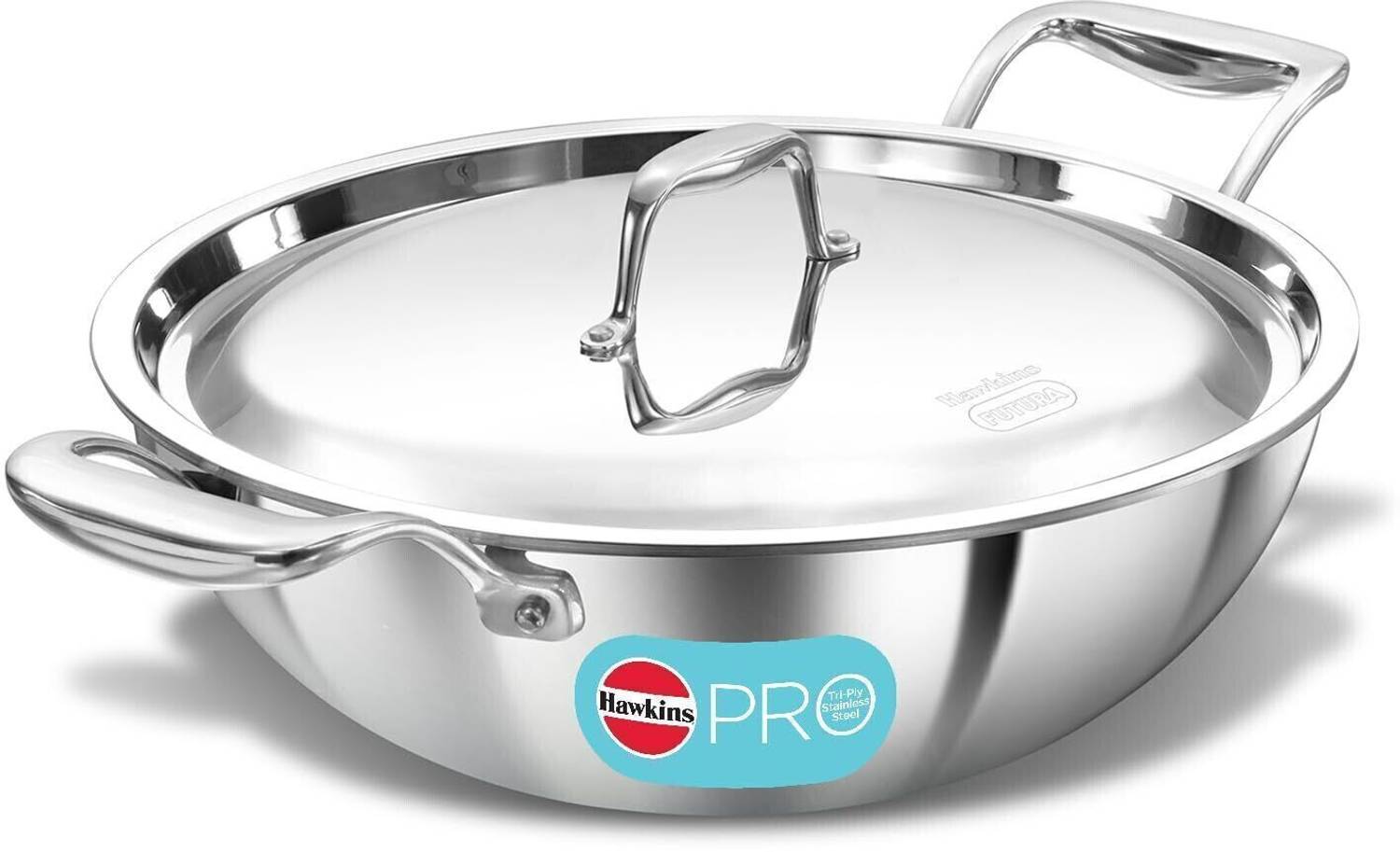
Hawkins Pro Triply Deep-Fry Kadhai 26 cm diameter 3.5 L capacity

Hawkins 20cm Tri-Ply Stainless Steel Frying Pan, Silver (SSF20) Fry Pan 20 cm diameter 1 L capacity
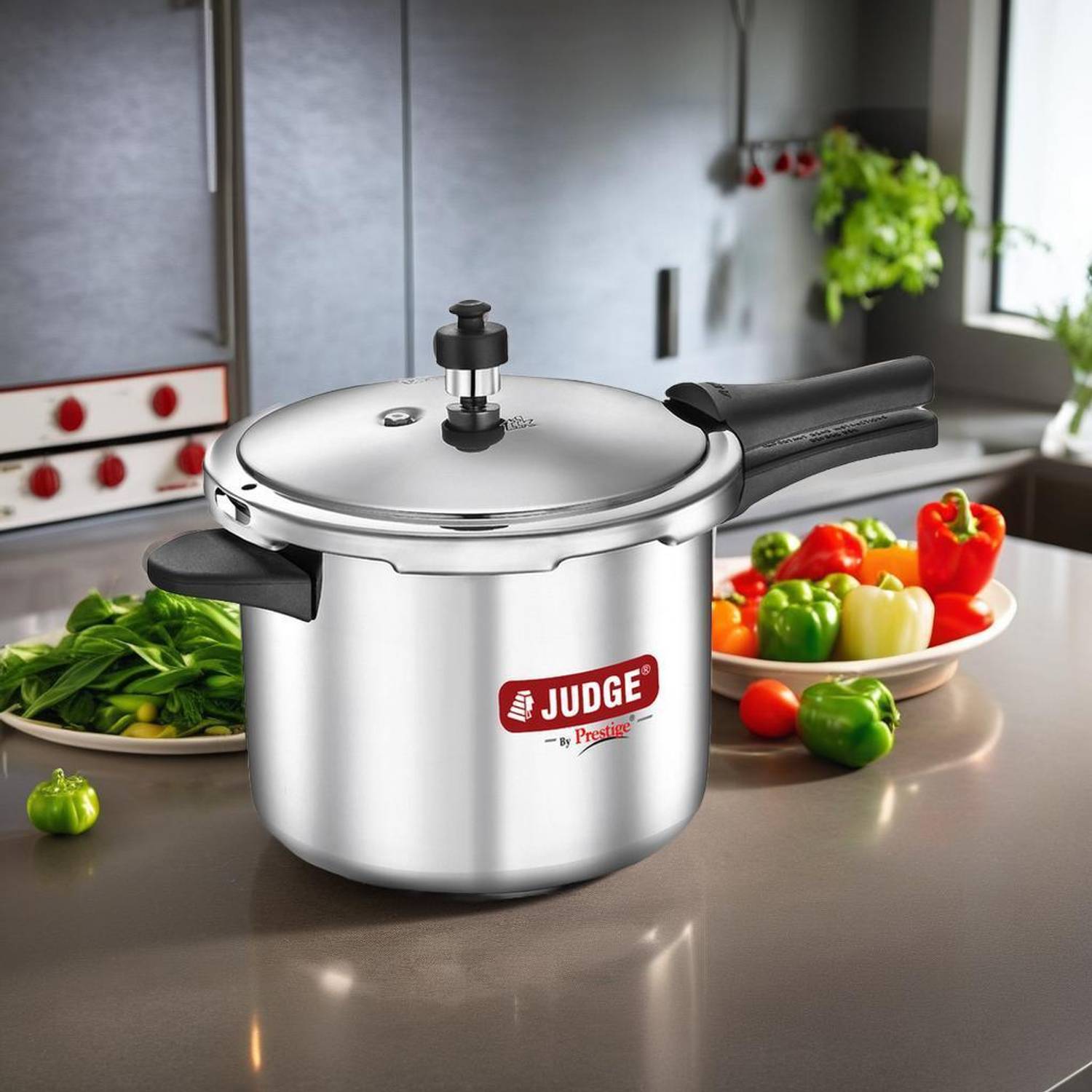
Prestige Judge ACE Outer Lid Easy Grip Handle|Long Lasting Regulator|Durable Gasket 5 L Outer Lid Induction Bottom Pressure Cooker
Want the full ranked list with filters and prices?See all pressure cookers ranked ›
What actually matters when buying pressure cookers
What to expect at each budget
Who it’s for — the right pressure cookers by person
Common mistakes to avoid
- Buying by litre number alone and overfilling - dals and rice foam, and a cooker filled past two-thirds clogs the vent and blows the safety valve.
- Ignoring gasket and spare-part availability for the brand, then being unable to replace a worn sealing ring and junking a good cooker.
- Skipping the ISI/BIS mark on a cheap unbranded cooker - a pressure vessel without certified safety valves is genuinely dangerous.
- Assuming any cooker works on induction; plain aluminium cookers need a compatible induction base to work on a 230V induction hob.
- Forcing the lid open before pressure fully drops, which is the classic cause of scalding accidents and a stuck, warped lid.
- Using acidic foods (tamarind, tomato) heavily in bare aluminium, which stains and can react - stainless or hard-anodised is better for those.
Tips for buying in India
- Fill only up to two-thirds for most foods and half for foaming items like dal, rice and legumes to keep the vent clear.
- Smear a little oil on the gasket occasionally and store the lid inverted (not locked) so the gasket keeps its shape and doesn't smell.
- Count whistles as a rough guide but learn your dishes - 2-3 whistles for rice, 3-4 for toor dal, more for rajma and chana after soaking.
- Soak rajma, chana and chickpeas for several hours before cooking to cut whistles, save gas, and get an even, soft result.
- Always let pressure release naturally or use the vent weight to release before opening; never pry the lid open under pressure.
- Check the safety valve and vent for blockages regularly, and keep the gasket clean and crack-free; replace the gasket every 1-2 years.
- For hard-water areas, descale mineral deposits from the inside and rinse well to prevent white crust and pitting on aluminium.
- During monsoon, dry the cooker thoroughly after washing and store with the lid off to prevent moisture, odour and gasket damage.
Frequently asked questions
Inner-lid or outer-lid pressure cooker - which is better?
Inner-lid cookers seal from inside for a tighter fit, are often seen as safer, and build pressure quickly, which is why many prefer them for daily dal and rice. Outer-lid cookers are easier to fill, stir and clean. Both are safe if ISI-marked; the choice is mostly personal preference and habit.
Aluminium, stainless steel or hard-anodised - what should I pick?
Aluminium is light, cheap and heats fast but stains and can react with acidic food. Stainless steel is durable, non-reactive and looks clean but is heavier and heats less evenly. Hard-anodised resists corrosion and staining and heats evenly, at a higher price. For daily heavy use, stainless or hard-anodised are the long-term choice.
What size cooker does my family need?
Roughly: 2-3L for one or two people, 3-5L for a family of three to four, 5-6L for five to six, and 6-10L for large or joint families and entertaining. Remember cookers fill only to two-thirds, so size up slightly for foaming dals and rice.
How often should I replace the gasket and safety valve?
Replace the gasket (sealing ring) every 1-2 years or as soon as it hardens, cracks or leaks steam. Check the safety valve regularly and replace it if it looks worn or clogged. Always buy the exact spare for your brand and model.
Can I use my pressure cooker on an induction cooktop?
Only if it has an induction-compatible base (a magnetic sandwich base). Many modern stainless and hard-anodised cookers are dual-fuel for gas and induction; plain aluminium cookers work on gas only. Check the base spec before buying if you have or plan an induction hob.
Is the ISI mark really necessary for a pressure cooker?
Yes, and it is mandatory in India. A pressure cooker is a pressure vessel, and ISI/BIS certification confirms the safety valve, gasket and construction meet safety standards. Never buy an uncertified or grey-market cooker to save money.
Why does steam leak from the sides of the lid?
Usually a worn, dirty or wrongly-seated gasket, or an overfilled cooker. Clean and correctly seat the gasket, don't overfill, and if leaking continues replace the gasket with the correct size for your model.
How many whistles for dal and rice?
As a rough guide, 2-3 whistles for rice and 3-4 for toor/moong dal, with soaked rajma and chana needing more. Timing varies with quantity, soaking and your stove, so treat whistles as a starting point and adjust to your dishes.
Can I bake or make dishes other than boiling in a pressure cooker?
Yes, with the weight off you can use it as a pot for cakes (using salt or sand as a base) and steaming, and with the weight on for the usual dal, rice, meat and legumes. Follow tested recipes, and don't improvise with the safety valve.