An electric rice cooker is one of the most under-rated appliances in an Indian kitchen. It quietly frees up a gas burner, cooks rice hands-free while you finish the dal and sabzi, and doubles up for steaming idli, boiling eggs, and making khichdi or pulao. For hostel students, working couples, and anyone tired of watching a pot boil over, a good cooker pays for itself in a month of convenience.
The Indian market is split between two very different machines that both get called "rice cookers". The first is the simple, affordable single-button aluminium-pot cooker (think Prestige, Bajaj, Pigeon) that switches from Cook to Warm automatically. The second is the pricier microcomputer or "fuzzy logic" cooker (Panasonic, Zojirushi imports, some Wonderchef models) that can delay-start, keep rice warm for hours, and cook different grains at different temperatures. Most Indian homes are perfectly served by the first type; the second makes sense only if you cook rice daily and want set-and-forget precision.
Before you buy, match capacity to how your family actually eats, check the BIS/ISI mark and the wattage against your 230V wiring, and think about the pot material and warranty. This guide walks through every spec that matters, realistic price bands, the mistakes people regret, and which cooker suits which kind of household.
Our top rice & electric cookers picks
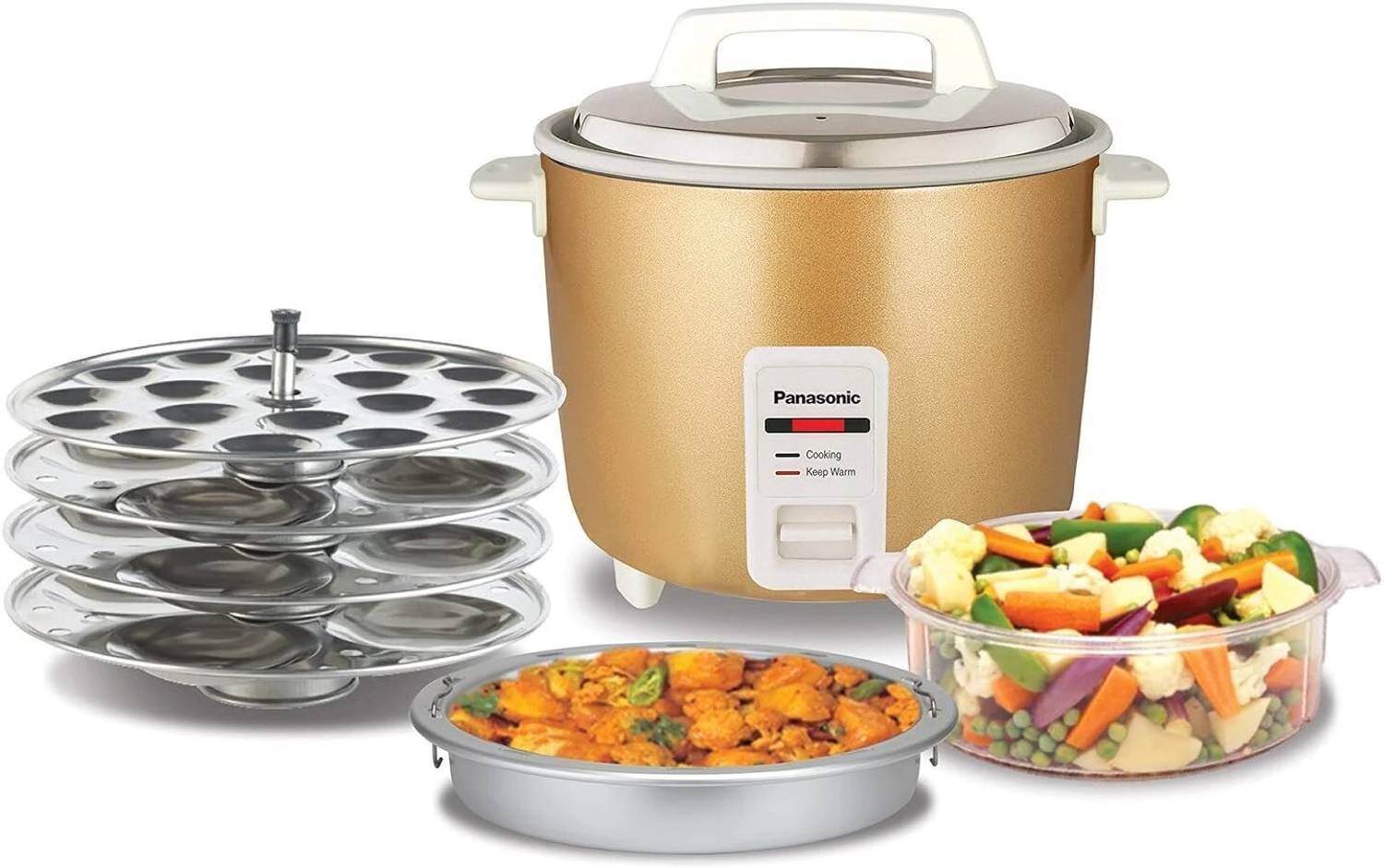
Panasonic SR-W18GH CMB Electric Rice Cooker with Steaming Feature

Panasonic Electric Cooker with Multi-Cooking Functions | Auto Keep-Warm Electric Pressure Cooker
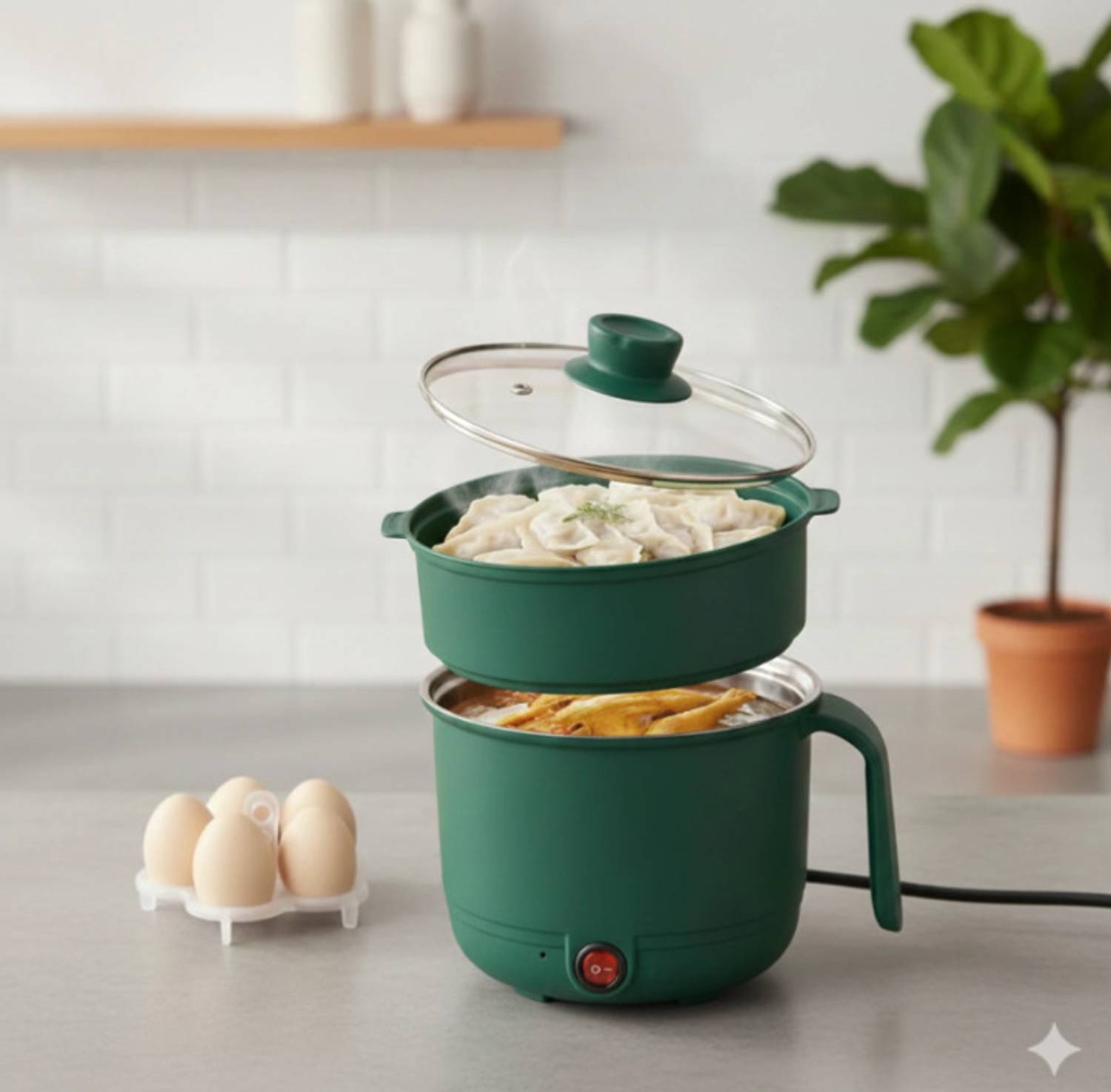
M.R.Fashion Multi-Functional Electric Cooking Pot with Steamer Egg Cooker, Electric Pressure Cooker, Food Steamer, Rice Cooker
Want the full ranked list with filters and prices?See all rice & electric cookers ranked ›
What actually matters when buying rice & electric cookers
What to expect at each budget
Who it’s for — the right rice & electric cookers by person
Common mistakes to avoid
- Buying the biggest cooker "to be safe" - a half-empty large cooker cooks rice unevenly and wastes counter space; a full smaller cooker performs better.
- Confusing raw-rice rating with cooked capacity and ending up with a pot too small for the family's actual meal.
- Using metal spoons and steel scrubbers on a non-stick pot, which strips the coating within a year and forces a costly pot replacement.
- Ignoring the BIS/ISI mark and buying an unbranded imported cooker whose element or cord is not rated for Indian voltage swings.
- Assuming any electric cooker can be used on an induction hob - the inner pot heats via the base plate, it is not induction cookware.
- Not checking whether a spare inner pot is available for the brand, leaving you to junk the whole unit when the coating wears out.
Tips for buying in India
- Rinse rice 2-3 times and use a 1:1.5 to 1:2 rice-to-water ratio; the cooker cannot judge water for you, so measure it.
- Add a few drops of oil or ghee to the water to reduce sticking and get separated grains, especially with basmati.
- Use the steaming basket to make idli, dhokla, or steam vegetables above the rice and save a gas burner.
- Unplug the cooker before lifting the inner pot; never operate it with the pot empty as the thermostat can trip or the coating can scorch.
- Let pressure and steam settle for 5-10 minutes on Warm after the switch clicks over for fluffier, fully-cooked rice.
- Wipe the base heating plate and the underside of the pot clean and dry before every use so heat transfers evenly.
- For hard-water areas, descale the visible steam vent and lid gasket occasionally to stop mineral crust and odd smells.
- Keep the cooker on a dry, stable surface away from the sink; during monsoon, store it with the pot out so no moisture sits on the element.
Frequently asked questions
Can I cook khichdi, pulao, or dal in an electric rice cooker?
Yes for one-pot dishes like khichdi and simple pulao, which cook well with the right water ratio. Whole dals that need long boiling can be done but take multiple cycles; a pressure cooker is faster for those.
What size cooker should a family of four buy?
A 1.8-2.8L cooker (roughly 700-1000W) comfortably feeds four with rice plus a steamed side. Go to 3-3.5L only if you regularly host guests or run a joint family.
Is a non-stick pot or a plain aluminium pot better?
Non-stick is easier to clean and needs less oil, but the coating wears in 2-3 years with rough use. Anodised aluminium lasts longer and is cheaper but rice sticks more. Pick non-stick for convenience, aluminium for durability.
Does an electric rice cooker work on an inverter or during power cuts?
It needs continuous mains or a strong inverter; a 700-1000W cooker will drain a small home inverter quickly and may not cook a full batch. It does not store heat, so a mid-cycle power cut interrupts cooking.
How is a fuzzy-logic cooker different from a normal one?
A fuzzy-logic (microcomputer) cooker uses sensors to adjust temperature through the cycle, offers delay-start and long keep-warm, and handles different grains. A normal cooker just switches Cook to Warm. The upgrade matters only for daily, precise rice cooking.
Can I keep rice warm all day in the cooker?
Most cookers hold rice warm for a few hours safely. Beyond 4-5 hours the rice dries at the edges and can develop an off taste, and simple thermostats may overheat. Fuzzy-logic models manage long holds better.
Why does my cooker switch to Warm before the rice is done?
Usually too little water, or a dirty/wet base plate causing a false temperature reading. Clean and dry the pot base, use the correct water ratio, and if it persists the thermostat may be failing.
Is an ISI mark really necessary?
Yes. The ISI/BIS mark certifies the heating element and cord meet Indian safety standards for our voltage fluctuations. It is your main protection against shock and fire, so avoid uncertified units.