The tawa is probably the most-used piece of cookware in an Indian kitchen. It sees action every single morning for rotis, phulkas, parathas, dosas, uttapams and the odd omelette, so a bad one quietly ruins breakfast for years. The trouble is that no single tawa does everything well: the flat cast-iron slab that gives you crisp, restaurant-style dosas is exactly the wrong tool for puffing up a soft phulka, and the featherlight nonstick that flips a chila in seconds will warp and peel if you push it to dosa-level heat.
Before you buy, get clear on two things: what you cook most, and what your heat source is. A gas-only household has very different needs from one that has switched to an induction cooktop, and a South Indian kitchen that turns out dosas daily should not buy the same tawa as a North Indian one built around rotis and parathas. Material (cast iron vs hard-anodised vs nonstick vs iron sheet), shape (flat vs concave), thickness or gauge, and the handle all matter more than the brand name printed on the box.
This guide walks through those trade-offs in plain language, with realistic Indian price bands, the mistakes people regret, and honest advice for different kitchens. Spend a little time here and you will likely buy one good tawa instead of three mediocre ones.
Our top tawa & griddles picks
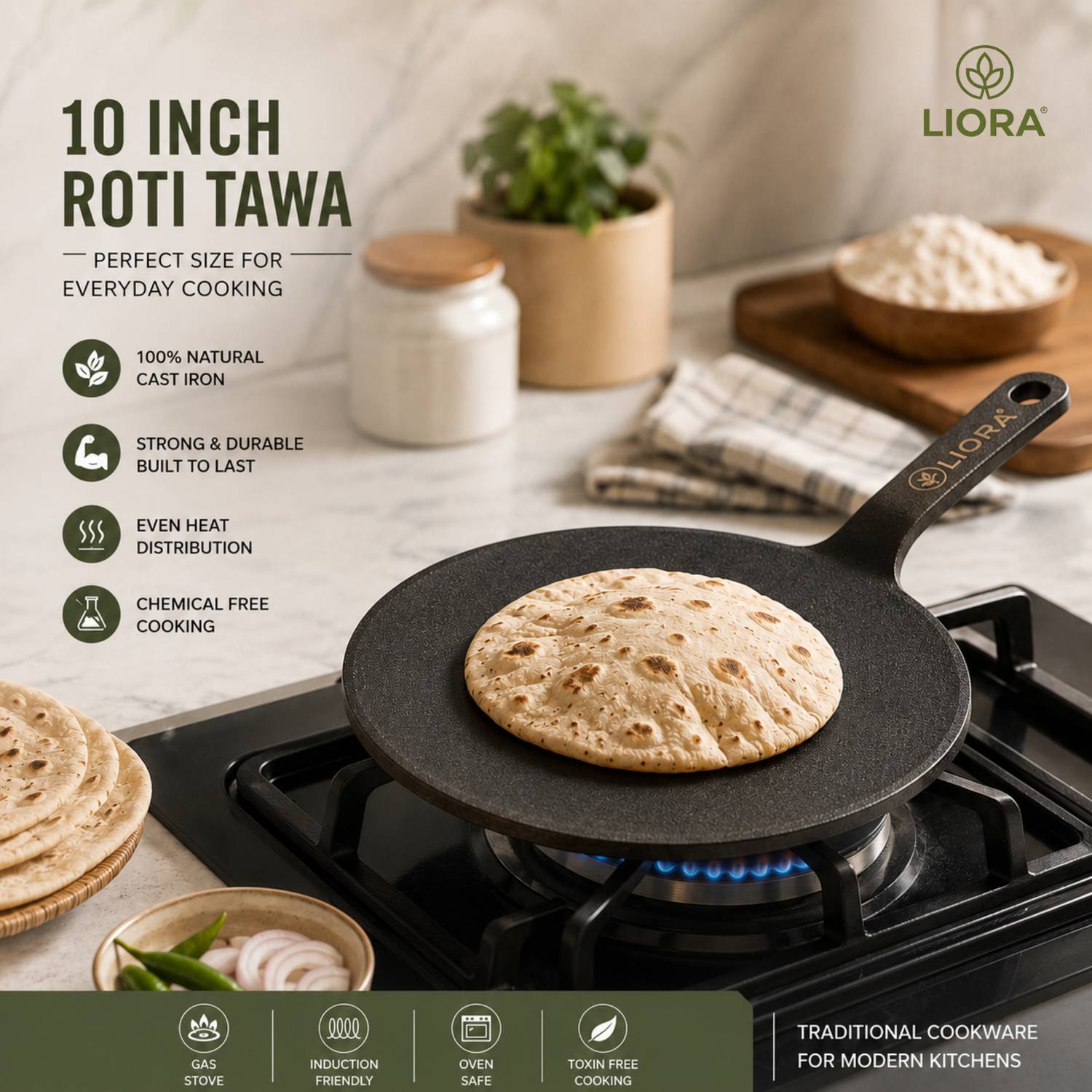
Liora Premium Cast Iron Roti Tawa With Silicon Handle | Toxins Free | Tawa 26 cm diameter
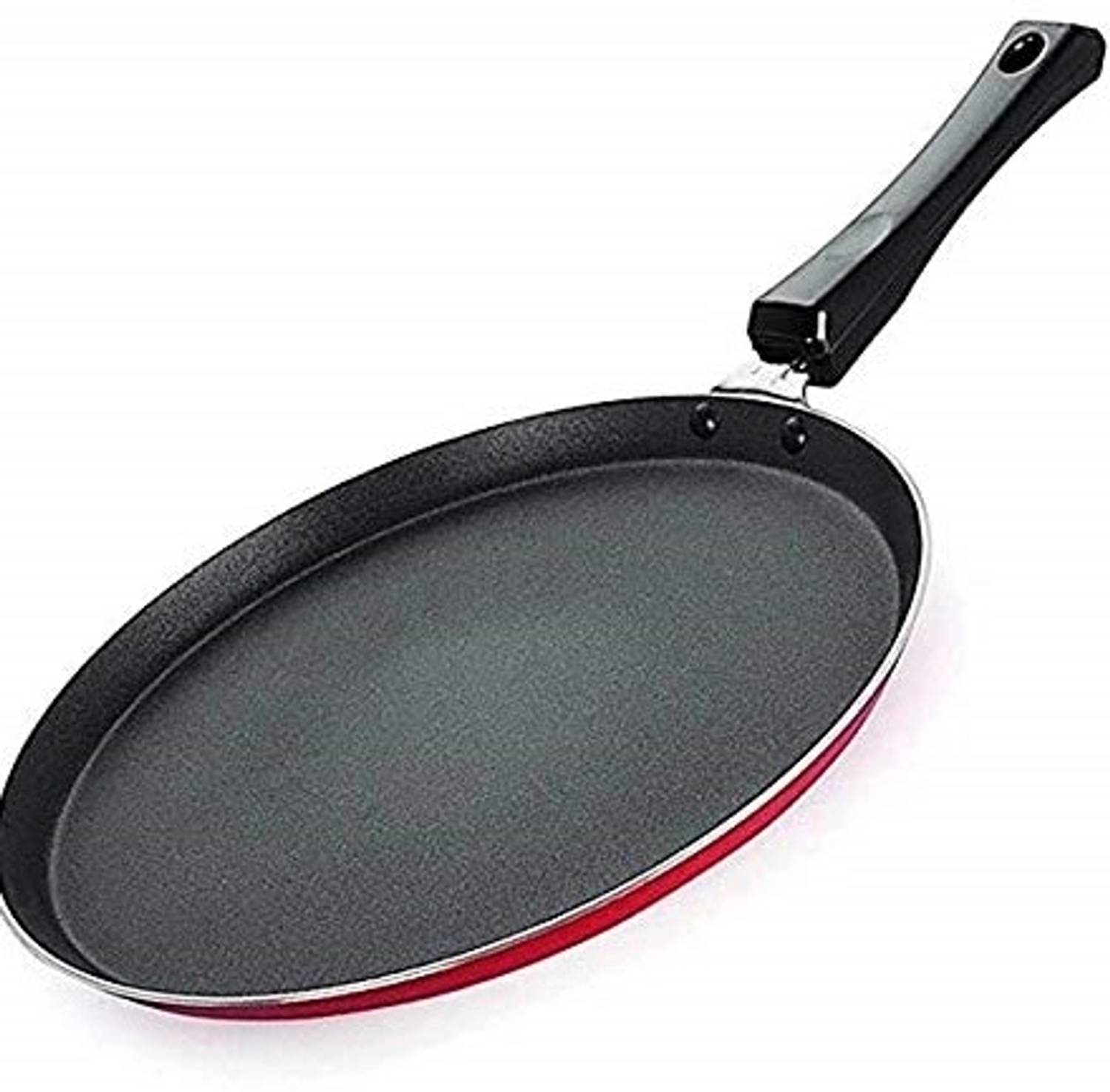
Mainsa Dosa Tawa non stick Tawa Tawa 26 cm diameter
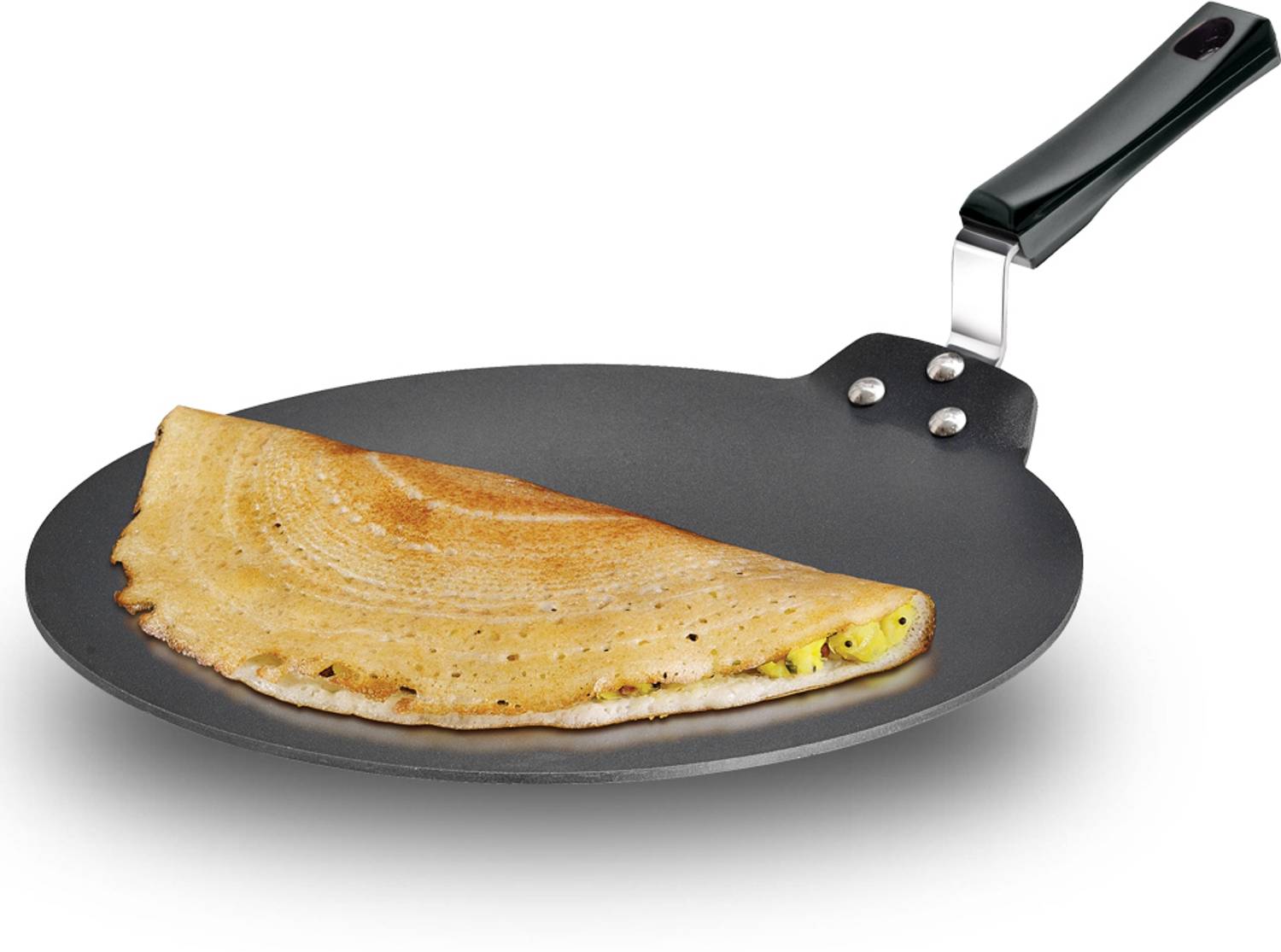
Hawkins Non Stick Dosa Tava (NDT33) Tawa 33 cm diameter
Want the full ranked list with filters and prices?See all tawa & griddles ranked ›
What actually matters when buying tawa & griddles
What to expect at each budget
Who it’s for — the right tawa & griddles by person
Common mistakes to avoid
- Buying one tawa and expecting it to do dosas, rotis and frying equally well; the flat-vs-concave and material trade-offs mean you usually need to prioritise one job.
- Choosing a thin, cheap tawa to save money; it develops hot spots, burns rotis in patches and warps on a gas flame within a few months.
- Getting a concave iron tawa for an induction cooktop; without a flat magnetic base it simply will not heat.
- Skipping seasoning on a new cast-iron or iron tawa and then complaining that everything sticks and it has started rusting.
- Using metal spatulas and high heat on a nonstick tawa, which scratches and degrades the coating long before its time.
- Buying an oversized tawa that overhangs the burner, so the edges stay cold and the centre scorches.
Tips for buying in India
- Season a new cast-iron or iron tawa: wash, dry fully, rub with oil and heat it repeatedly until the surface darkens and turns non-stick; repeat after every few uses early on.
- Keep a dedicated flat tawa for dosas and a separate one for rotis if you cook both daily; it saves constant re-seasoning and keeps flavours clean.
- Never pour cold water on a hot cast-iron or hard-anodised tawa; the thermal shock can crack cast iron and warp thin metal.
- Dry an iron tawa immediately after washing and wipe a thin film of oil over it to stop rust, especially during the monsoon.
- For crisp dosas, let a cast-iron tawa preheat properly and rub half a cut onion over the surface before the first dosa; it evens out sticking.
- Match tawa diameter to your burner; a 28 cm tawa on a standard home burner heats far more evenly than a 33 cm one.
- Preheat on medium rather than blasting high heat from cold; this reduces warping and gives more even browning.
- Avoid the dishwasher for cast iron and most nonstick tawas; hand-wash with a soft scrubber to protect seasoning and coating.
Frequently asked questions
Which tawa is best for dosas, cast iron or nonstick?
For crisp, evenly browned dosas, a well-seasoned flat cast-iron tawa is hard to beat and only improves with use. Nonstick is more forgiving for beginners and needs no seasoning, but it cannot take the high heat a great dosa wants and will wear out in a couple of years.
Should I buy a flat or concave tawa?
Buy flat for rotis, dosas and uttapams, where you need an even surface. Choose concave only if you mainly shallow-fry or make items with more oil; on a concave tawa, rotis slide to the centre and cook unevenly.
Is a cast-iron tawa safe and healthy?
Yes, and it can add a small amount of dietary iron to food. It has no synthetic coating to worry about, but it needs seasoning and careful drying to avoid rust, so it suits cooks willing to maintain it.
Will my old iron tawa work on an induction cooktop?
Only if it has a flat, magnetic base. Iron is ferromagnetic, so many flat iron tawas work, but concave or warped ones will not sit flat enough to heat. Test it by seeing if a fridge magnet sticks firmly and the base is truly flat.
What size tawa should I buy?
For everyday rotis, 25-28 cm is ideal. If you make large dosas or cook for a big family, go for 30-33 cm, but make sure it fits your burner so the edges do not stay cold.
How do I stop my nonstick tawa from peeling?
Use it only on low-to-medium heat, never scrape it with metal spatulas, hand-wash it gently, and let it cool before washing. Even so, treat nonstick as a 2-4 year consumable rather than a lifetime tawa.
Why does my roti not puff up on the tawa?
Usually the tawa is not hot enough or the heat is uneven. Preheat properly on medium-high, cook the roti partly on the tawa, then finish it directly over the flame or on a wire rack to get the puff.
Is hard-anodised a good middle ground?
Yes. Hard-anodised tawas are durable, resist warping, heat fairly evenly and need no seasoning, though food sticks more than on nonstick. They are a sensible choice if you want low maintenance without a fragile coating.